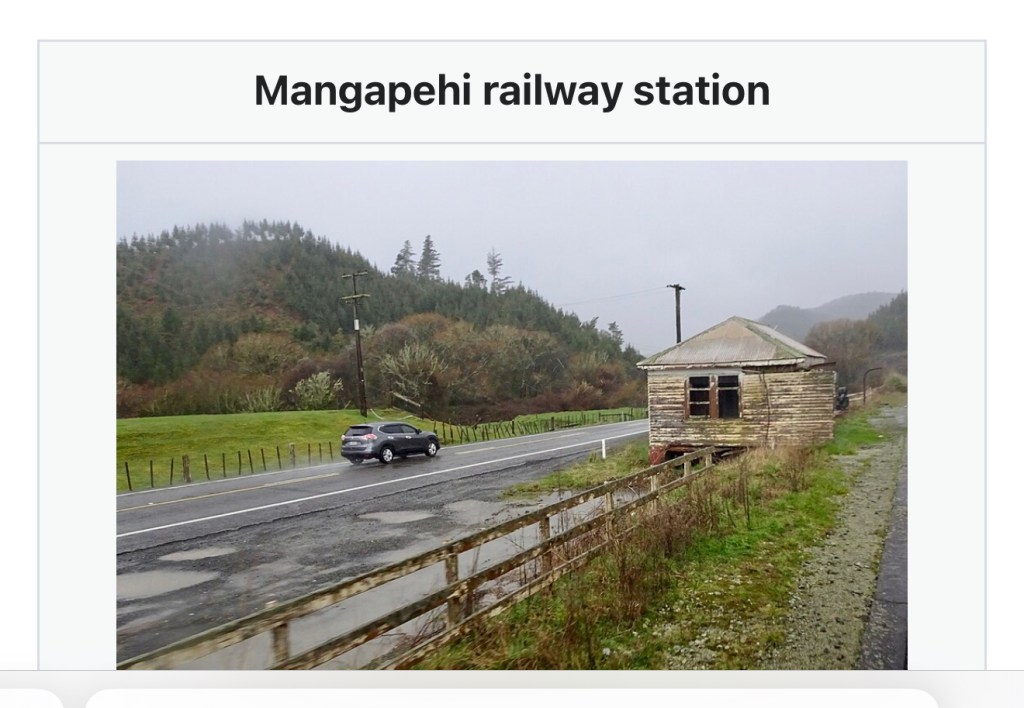
As a New Zealand trained teacher in the early 1960s, I was posted to a tiny school nestled in the middle of the North Island. Mangapehi was a timber milling town tucked into the side of a mountain, with a modest three-teacher school—though at the time, only two teachers were present.
Mr. Woods, the principal, taught the senior classes. His wife, not formally trained, helped with the infants. I had the middle class—a delightful composite of children aged 6 to 10.
Most of the families in Mangapehi were Māori. In fact, we had only two Pākehā children at the school. It was a warm and deeply connected community.
I used to travel to and from Mangapehi by train—yes, the little station in the photo. I still remember walking down the long driveway from the farmhouse where I boarded, greeted at the gate each morning by a large group of children. They would carry my bag, and together we’d walk the rest of the way to school.
Winter was bitterly cold. The sun struggled to climb over the mountain until midday, if at all. The cold wind would whistle through the gaps in the wooden floorboards. We had a wood-burning heater in the corner of the room, but if the wood was damp, it filled the room with smoke rather than warmth.
Yet despite the cold, the music warmed everything. The Māori children had a natural, joyful connection with music. I would teach them a new song, and almost immediately we had harmony. Singing was a part of them.
We even had a ukulele band—thirty ukuleles, all tuned by me. We sang and played together, and there was laughter in the music.
That experience stayed with me and deeply influenced how we raised our own children. From toddlerhood, Kerri and Jeff sang nursery rhymes in harmony. Car rides turned into singalongs, and the studio was a familiar space for them. Music, I believe, became part of our family language.

